Osaka adult nightlife is not one district called “Osaka escort.” Kita refers to the northern downtown around Osaka/Umeda; Minami to the southern downtown around Namba and Shinsaibashi. Kitashinchi is a more specific entertainment area within the Kita context. The Japanese adult-industry terms are separate from those place names.
If you are out near Dotonbori with friends, an English page headed “Osaka nightlife” may be discussing somewhere else in the city. The useful comparison is between neighborhoods and formats—not an unsupported claim that Osaka is always cheaper, friendlier or more relaxed than Tokyo.
Kita vs Minami in one table
| Name | Geographical level | Nightlife context |
|---|---|---|
| Kita | Northern downtown | Osaka/Umeda area; includes several distinct entertainment neighborhoods |
| Kitashinchi | A specific entertainment district | OSAKA-INFO describes a high-end entertainment area with clubs |
| Minami | Southern downtown | Namba/Shinsaibashi context |
| Dotonbori | A recognizable place within the Minami context | Neon, restaurants and bars; not the name of a sexual-service format |
Osaka: broad downtown labels and smaller areas
Osaka Station and Umeda are broad reference names.
Kitashinchi is a more specific entertainment district in this context.
Namba and Shinsaibashi are reference areas.
Dotonbori is a recognizable riverfront restaurant-and-bar area.
Kitashinchi: what “club” means in context
OSAKA-INFO identifies Kitashinchi as a high-end entertainment district in the Kita area. In Japanese nightlife writing, “club” can describe a venue with staff entertainment and drinks. In English travel writing, the same word can suggest a dance floor and a DJ. Those meanings should not be silently substituted.
The distinction also matters to adult-nightlife searches. A hostess-style drinking venue is not a soapland or an outcall sexual-service format. “Premium club” explains neither the full business category nor the content of an individual visit by itself.
Minami: Dotonbori is a landmark, not a category
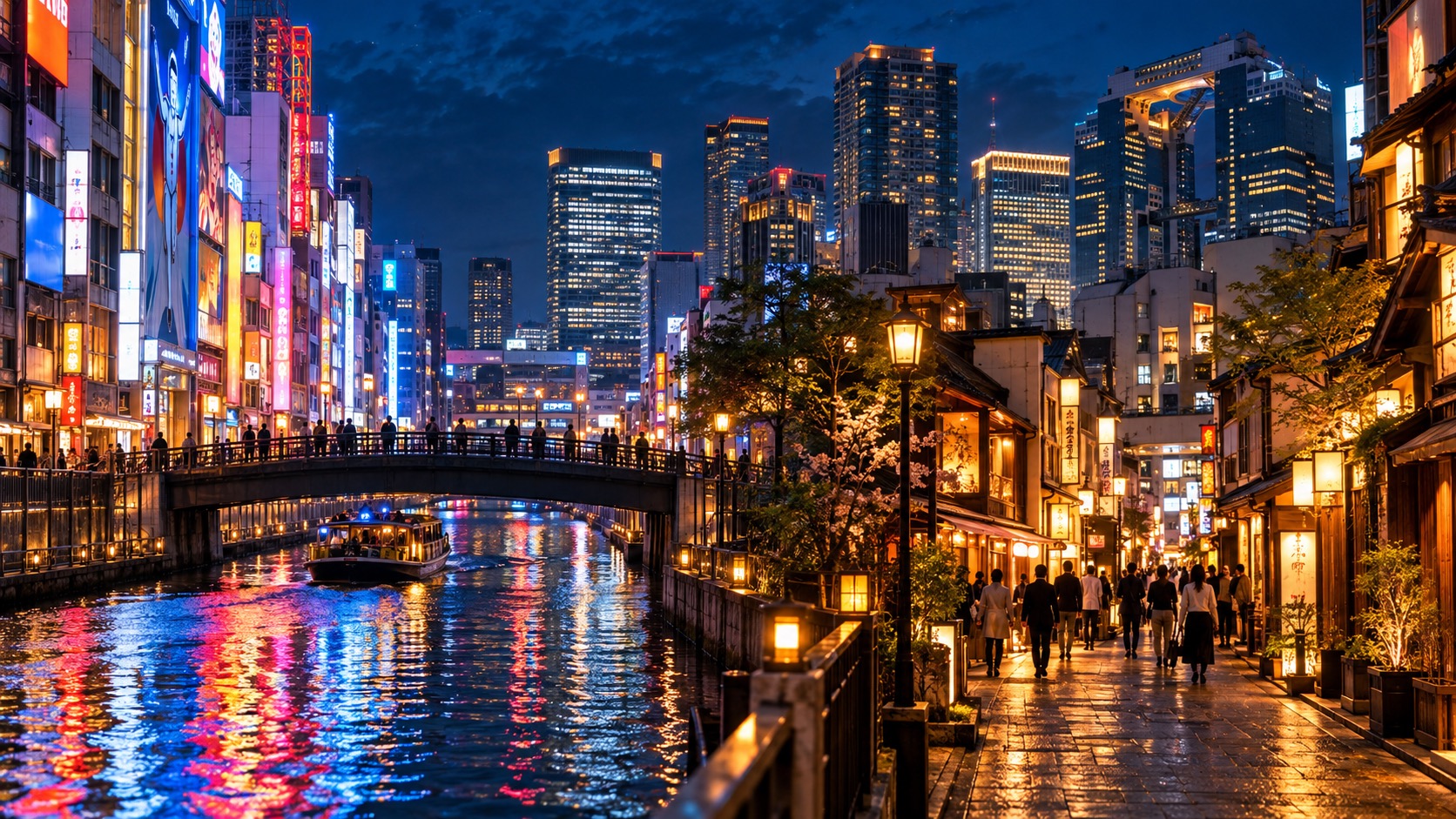
Osaka’s official nightlife coverage places Namba on the Minami side and describes Dotonbori’s restaurant-and-bar setting. A general picture of the river’s signs establishes a recognizable neighborhood, but it does not establish the location or format of every adult business in an Osaka directory.
Soemoncho and other smaller place names can appear in Minami coverage. Keep that smaller geography when an article supplies it. Flattening every address into “near Dotonbori” may make the article sound easy to read while losing the local information a visitor actually needs.
Hotel health, outcall or a club: what the Osaka result is describing
You have finished dinner around Namba, the group is still out, and the search screen suddenly mixes “club,” “massage,” “hotel escort” and “outcall.” These words describe different kinds of nightlife. Knowing that the result is in Osaka is only the first part of the answer; the format is the second.
Hotel health is a Japanese adult-industry expression, also shortened to hoteheru. It is not the name of a hotel spa. Delivery health, or Deriheru, is the broader outcall label. A directory may use “hotel escort service parlor” and “outcall escort service” as English headings. Those are the directory’s translations; they should be read beside the individual business’s own description. Our Deriheru guide explains the terminology in more detail.
A hostess club, a snack bar and a dance club belong to different drinking or entertainment formats. OSAKA-INFO describes Kitashinchi using premium-club and snack-bar language, while its music guide discusses clubs with DJs and dancing. “Club” on its own therefore gives an English-speaking visitor too little information. A love hotel is accommodation, rather than another name for soapland or delivery health. A hotel in a photograph does not establish the format of a nearby business.
| Result label | Read it as | Local detail that completes the picture |
|---|---|---|
| Hotel health / hoteheru | An adult-industry format involving a hotel arrangement | The business’s own category and actual local area |
| Delivery health / outcall | An outcall format | Stated coverage, which may differ from its office location |
| Hostess club / snack bar | Drinking and staff-entertainment formats | What the venue actually describes in English |
| Nightclub | A music or dancing venue | The named venue and neighborhood |
How the leading directories divide Osaka
An Osaka directory may begin with a broad city heading and then divide information by smaller areas or business terms. Those are editorial filters, not official district borders. A category menu for an outcall format and an area menu for Umeda classify different things, even when they appear beside the same photograph.
Keep Kita, Kitashinchi, Minami and Dotonbori at their own geographic levels. Kita and Minami are broad downtown labels; Kitashinchi is a more specific entertainment district. Dotonbori names a recognizable riverfront setting within the Minami context. A city tag alone cannot make those four names interchangeable.
This hierarchy is the useful local difference from a nationwide overview: the same city contains broad downtown names, smaller entertainment districts and landmark streets. A city-wide ranking collapses those levels and can also mix unlike business formats.
What changes from Tokyo—and what does not
The place names change. Kita and Minami do not correspond neatly to Kabukicho and Yoshiwara: they describe broad downtown areas, while those Tokyo names identify more specific districts. Comparing them as equivalent “red-light districts” is a geographical mismatch.
The words deriheru, soapland and hotel health do not acquire new dictionary meanings when the city changes. A regional prefix is a location cue, not a new service category. The distinction between drinking entertainment, performance, accommodation and adult sexual-service formats still matters.
Why city-wide claims about price and atmosphere are weak
“Osaka is cheaper than Tokyo” sounds useful but needs comparable, dated evidence. Mixing unlike formats, lengths, inclusions or districts does not establish a city-wide difference. The same applies to claims that all Osaka businesses are more welcoming to foreigners.
A stronger informational article states what has actually been checked: the neighborhood hierarchy, the business terminology and the published source behind each claim. Atmosphere can be illustrated with dated local photographs; it should not be invented from a city’s stereotype.
Quick answers for an Osaka night out
Are Kita and Kitashinchi the same name?
No. Kita is the broader northern downtown context; Kitashinchi is a specific entertainment district.
Is Minami a synonym for soapland?
No. Minami is a geographical label.
Is Osaka’s adult nightlife automatically cheaper than Tokyo’s?
That cannot be established from regional names or isolated advertised figures.
Sources and verification
Rechecked 11 November 2026: OSAKA-INFO’s nightlife overview places Osaka Station/Umeda on the north side and Namba on the Minami side; OSAKA-INFO’s Kitashinchi page describes the more specific entertainment district and its club/snack-bar context. Discover Osaka’s music-nightlife feature uses club language for DJs and dancing, supporting the distinction between different meanings of “club.” Tokyo Metropolitan Police’s category list and Imidas’s deriheru entry support the business-format terminology. The diagrams explain geographic levels and word meanings, not the present status or quality of particular businesses.