Tokyo’s adult nightlife is not one district or one kind of venue. Kabukicho is a dense entertainment area beside Shinjuku Station. Yoshiwara is a historic district in Taito whose name needs to be distinguished from present-day terms such as soapland. Shibuya’s Dogenzaka and Maruyamacho sit in a much broader nightlife scene. Ikebukuro is a major station district; an industry term appearing beside its name still needs its own definition. Those place names and business labels answer different questions.
That distinction matters when you are searching in English on a phone at night. A result headed “Tokyo escort” may be a regional directory, an explanation of a Japanese industry term, or a page about a particular business. The English word alone does not tell you which district, format, or type of experience the page describes.
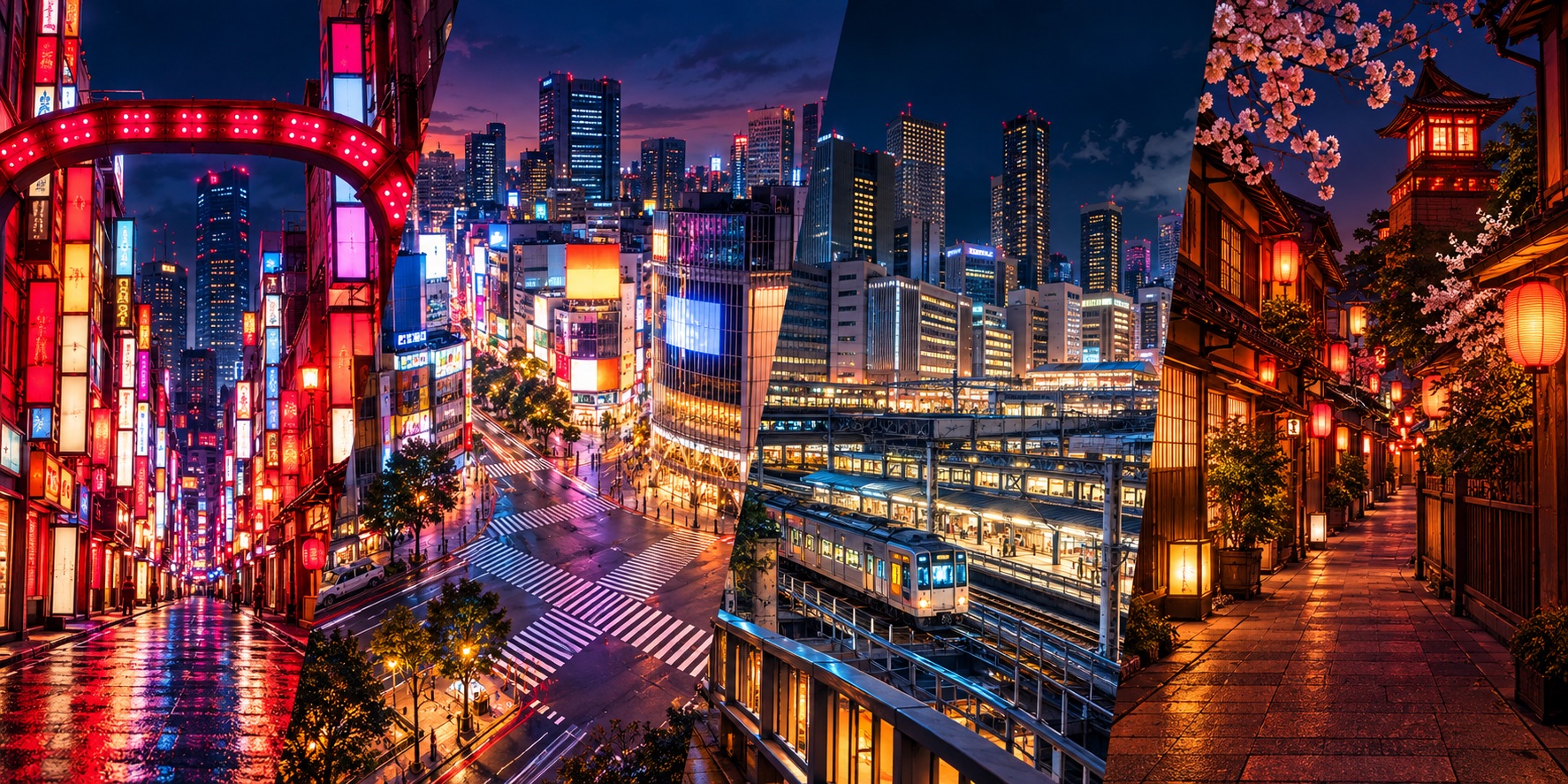
Which part of Tokyo does the search result mean?
| Place | Useful anchor | What makes the search results different |
|---|---|---|
| Kabukicho, Shinjuku | Shinjuku Station’s east side; Kabukicho Tower and nearby Golden Gai are recognizable landmarks. | Bars, cinemas, hostess clubs and adult-industry pages share the same neighborhood name. The word “club” needs a closer look. |
| Yoshiwara, Taito | The Senzoku area and Yoshiwara Shrine; a separate part of Tokyo from Shinjuku. | The historical place name and a present-day category such as soapland answer different questions. Neither identifies a particular current establishment. |
| Shibuya, Dogenzaka and Maruyamacho | Shibuya Crossing and the streets beyond it. | Music venues, clubs, hotels and adult-industry listings can all appear under the broad “Shibuya nightlife” label. |
| Ikebukuro | Ikebukuro Station; Seibu is on the east side, Tobu on the west. | A large station area gets reduced to one name online. A business-format word beside that place name is another layer of information, not a definition of the whole district. |
The table is a map of meaning, not a ranking. If you know whether a result names a neighborhood, a business category or a specific venue, you can judge whether it answers your question before reading the entire page.
Kabukicho: the bright lights do not identify a business format
Kabukicho sits on the entertainment side of Shinjuku, close to the station’s east exits. GO TOKYO describes a mix of restaurants, bars, theaters, cinemas and other venues; nearby Golden Gai is known for small drinking bars. The Tokyu Kabukicho Tower is a contemporary entertainment landmark. These are useful physical anchors, but they do not turn every doorway in the district into the same kind of business.
This is where English descriptions can become especially confusing. A hostess club, often called a kyabakura in Japanese, centers on conversation and drinks with staff. A host club refers to male hosts. A music nightclub is another format again. A page that says only “Shinjuku club” leaves a major question unanswered. The specific category matters more than the neon photograph.
Kabukicho is also a neighborhood inside Shinjuku, while “Shinjuku” can refer to a much larger area. A regional listing headed “Shinjuku” does not automatically mean a storefront in Kabukicho. For the broader street and culture context, see our Shinjuku guide for foreign visitors.
Yoshiwara: a different district with a different history
Yoshiwara is in Taito’s Senzoku area. Taito City identifies Yoshiwara Shrine at Senzoku 3-chome and records the district’s Edo-period history. It is not a corner of Shinjuku or a station-side extension of Kabukicho. If a search result alternates between “Tokyo,” “Asakusa,” “Taito” and “Yoshiwara,” check which geographical level it actually means.
In a phrase such as “Yoshiwara soapland,” Yoshiwara is the historical place name and soapland is a present-day adult-business category. The two words do not belong to the same historical definition. Municipal history explains the district; the police category list explains a business format. Neither establishes the current details or status of a particular venue.
The useful question here is simple: is the page explaining Yoshiwara as a historic place, defining soapland as a format, or describing an individual business? Treating all three as the same article produces a misleading picture of the district.
Shibuya: Dogenzaka is one part of a wider night out
Shibuya Crossing is the familiar image, but it is a starting landmark rather than a definition of the district’s nightlife. GO TOKYO describes Shibuya as a center for fashion, music and entertainment, and identifies Maruyamacho among its music and clubbing areas. Dogenzaka is another place name that appears in night maps and venue addresses. These names help locate a page, yet they do not tell you its business category.
A traveler might see “Shibuya nightlife” attached to a DJ venue, a bar, a hotel or an adult-industry page. “Love hotel” names accommodation, not the same thing as a hostess club or delivery health. Reading the venue type separately from the address is the quickest way to avoid confusing one search result with another.
Compared with Kabukicho, Shibuya’s widely known image is music, youth culture and the streets around the crossing. That is a distinction in the overall neighborhood character, not a claim that one category is absent from either area.
Ikebukuro: start with the station side, then read the term
Ikebukuro is not one short street. GO TOKYO places the Seibu department store on the station’s east side and Tobu on the west; Sunshine City is a major landmark farther east. Those anchors are more useful than an English listing that says only “Ikebukuro.” They also help keep a station-area guide separate from a specific address.
A place label such as Ikebukuro can appear beside an industry term. Read those parts separately: delivery health, often shortened to deriheru, describes a dispatched adult-service format, not a whole neighborhood. The expression hotel health also needs a definition and source when a page uses it; the shared word “health” is not proof that two descriptions mean the same thing. Our guide to delivery health terminology explains deriheru in detail.
Five words that make English results easier to decode
| Word you may see | Plain-English meaning | What it does not tell you |
|---|---|---|
| Soapland | A Japanese adult-bathhouse category. | That every listing in Yoshiwara has the same details. |
| Deriheru | Short for “delivery health,” an outcall adult-industry term. | That it is a storefront in the named district. |
| Hotel health / hoteheru | An adult-industry expression whose underlying format needs explanation and a source. | That it means healthcare or is simply another spelling of deriheru. |
| Kyabakura | A Japanese term for a hostess or cabaret club centered on conversation and drinks. | That “club” always means a nightclub or an adult sexual-service category. |
| Escort | A broad English umbrella word used inconsistently across sites. | The exact Japanese format, district, or policies of a listing. |
These romanized forms are here so an English reader can pronounce and recognize them. You do not need to read Japanese characters to follow this article.
Read the place name, the category and the evidence separately
A district comparison answers a geographic question. A category definition answers a vocabulary question. A historical account answers a question about a particular period. Combining those sources makes an English description easier to understand, but it does not turn them into evidence about a specific current business.
This is why the four places should not be ranked by a supposed city-wide price, language level or service quality. A neighborhood name supplies context; those additional claims would need their own dated evidence.
Quick answers
Are Kabukicho and Yoshiwara the same area?
No. Kabukicho is in Shinjuku; Yoshiwara is in Taito’s Senzoku area. Their histories and the terms associated with them also differ.
Does “Tokyo escort” identify a Japanese business category?
No. It is an English label used across different kinds of pages. Look for the specific Japanese term and the actual district.
Is a love hotel the same thing as hotel health?
No. “Love hotel” names a type of accommodation. “Hotel health” is an adult-industry term; the shared word “hotel” does not make the two identical.
Does an English directory confirm that every listed venue has English-speaking staff?
No. An English directory shows that information is published in English. Language support at a specific business is a separate claim.
Sources and further reading
Place, landmark and category references rechecked 11 November 2026: GO TOKYO: Shinjuku; GO TOKYO: Golden Gai; GO TOKYO: Kabukicho Tower; Taito City: Yoshiwara Shrine and district history; GO TOKYO: Shibuya; GO TOKYO: Ikebukuro’s east and west sides. Japanese adult-industry labels were checked against the Tokyo Metropolitan Police’s business-category list and the Imidas definition of deriheru. These sources explain place and category, not the current details of any individual business.