


A regional label tells you where a page is organized, not what every business there is like. Tokyo, Osaka and Fukuoka are cities. Kabukicho, Minami and Nakasu are more specific place names. Words such as deriheru and soapland describe different adult-industry formats, rather than cities or neighborhoods.
This guide keeps those two layers separate. It explains the local names behind a broad Japan nightlife search, without claiming that one city is universally cheaper, safer or more satisfying than another.

For the documented distinction between Shinjuku’s post-town history and postwar Kabukicho, read our Shinjuku history guide.

City, district and format: read them in that order
| City or wider label | More specific name | What to keep separate |
|---|---|---|
| Tokyo | Shinjuku and Kabukicho | A city, a wider area and an entertainment district are different geographic levels. |
| Osaka | Kita/Umeda and Minami/Namba | Northern and southern downtown areas are not two adult-service categories. |
| Fukuoka | Nakasu and Tenjin | Nightlife areas include food, drinks and entertainment; the district name does not identify a business format. |
When a directory groups a large region on one page, its coverage may be broader than the place named in your search. Read the address or geographic description rather than assuming that a regional heading refers to one street.

For the limits of cross-country comparisons, read the separate comparison framework.

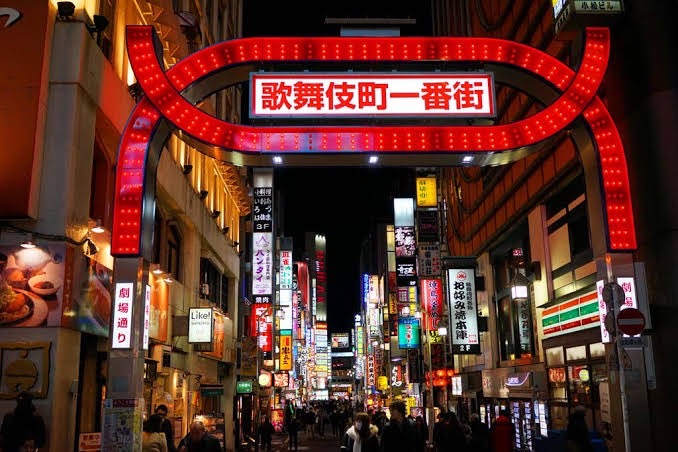
Tokyo: Shinjuku is wider than Kabukicho
Tokyo’s official visitor guide describes different sides of Shinjuku Station and identifies the east side with shopping, dining and entertainment. Kabukicho is part of that east-side nightlife setting. A result headed “Tokyo” may discuss Shinjuku or an entirely different district.
Source: GO TOKYO’s Shinjuku guide.
In Tokyo, distinguish a broad entertainment district such as Kabukicho from the historically specific name Yoshiwara. They are not two interchangeable labels for one place. The Japan Tourism Agency describes Yoshiwara’s move from Nihonbashi to Oku Asakusa after the 1657 fire. That history explains a place name, not the present operating status of any business. Source: Japan Tourism Agency’s Yoshiwara explanation.
Osaka: Kita and Minami are geographic labels
OSAKA-INFO presents Osaka nightlife through northern and southern areas. Minami includes the Namba and Dotonbori context; Kita is associated with Osaka Station and Umeda. These distinctions help place a description on the map.
They do not establish a single price level or personality for every business in either area. A claim that “Osaka is always friendlier” would need evidence beyond a district name. Source: OSAKA-INFO’s nightlife overview.

Fukuoka: distinguish Nakasu from the whole city
Fukuoka City’s visitor guide describes yatai food stalls in Nakasu and Tenjin and the neon-lit riverfront around Nakasu. Food stalls, bars and other nightlife businesses are different subjects, even when they appear in one evening itinerary.
“Hakata,” “Nakasu” and “Fukuoka” should therefore be read in context, rather than treated as one interchangeable location. A food-and-drink guide does not establish the category of an adult business nearby. Source: Fukuoka City’s night guide.

Kyoto and Sapporo: two more regional questions
For local distinctions beyond the three-city summary, compare these two different regional contexts.
Read the business term separately from the place name
A city name supplies geographic context; it does not define a business format. Terms and practices can vary, so an explanation should identify the term it is using and the source for that meaning.
For a comparison of translated labels, read Japanese terminology compared.

Do not use an unverified city-wide dollar range to compare unlike descriptions. A meaningful numerical comparison would need a date, a defined sample and the same scope in each place. This article does not have that dataset and does not publish a city-wide service-price ranking.

Quick answers
Is Kabukicho the same as Tokyo nightlife?
No. It is one district within a much larger city.
Are Kita and Minami types of adult service?
No. In this context they are Osaka area labels.
Does a Nakasu result describe all of Fukuoka?
No. Check how much of the city or region the page actually covers.
Should the city name explain the format?
No. Read the location and the business term as separate pieces of information.


I am extremely inspired together with your writing abilities and also with the layout to your blog. Is this a paid topic or did you customize it your self? Either way stay up the excellent quality writing, it is rare to peer a great weblog like this one today!
Thank you so much for your warm comment!
It means a lot to me that you noticed both the writing and the layout.
This blog is something I’ve been building little by little with personal touches, so your words are truly encouraging.
I’ll keep doing my best to deliver high-quality content, and if there’s anything you’d like to read more about, I’d love to hear it.
It would be an honor to continue growing this blog together with someone like you. ✨
Pingback: Discover History and Cultural Significance of Japan Escort Service